Powered By Blogger

Tuesday, 6 September 2016

Today in History


Today in History


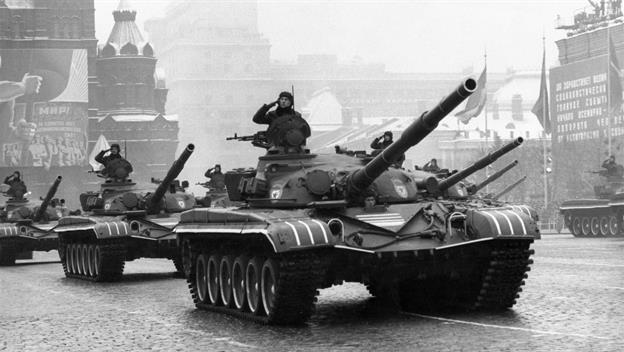
On this day in 1915, a prototype tank nicknamed Little Willie rolls off the assembly line in England. Little Willie was far from an overnight success. It weighed 14 tons, got stuck in trenches and crawled over rough terrain at only two miles per hour. However, improvements were made to the original prototype and tanks eventually transformed military battlefields.
The British developed the tank in response to the trench warfare of World War I. In 1914, a British army colonel named Ernest Swinton and William Hankey, secretary of the Committee for Imperial Defence, championed the idea of an armored vehicle with conveyor-belt-like tracks over its wheels that could break through enemy lines and traverse difficult territory. The men appealed to British navy minister Winston Churchill, who believed in the concept of a “land boat” and organized a Landships Committee to begin developing a prototype. To keep the project secret from enemies, production workers were reportedly told the vehicles they were building would be used to carry water on the battlefield (alternate theories suggest the shells of the new vehicles resembled water tanks). Either way, the new vehicles were shipped in crates labeled “tank” and the name stuck.
The first tank prototype, Little Willie, was unveiled in September 1915. Following its underwhelming performance–it was slow, became overheated and couldn’t cross trenches–a second prototype, known as “Big Willie,” was produced. By 1916, this armored vehicle was deemed ready for battle and made its debut at the First Battle of the Somme near Courcelette, France, on September 15 of that year. Known as the Mark I, this first batch of tanks was hot, noisy and unwieldy and suffered mechanical malfunctions on the battlefield; nevertheless, people realized the tank’s potential. Further design improvements were made and at the Battle of Cambrai in November 1917, 400 Mark IV’s proved much more successful than the Mark I, capturing 8,000 enemy troops and 100 guns.
Tanks rapidly became an important military weapon. During World War II, they played a prominent role across numerous battlefields. More recently, tanks have been essential for desert combat during the conflicts in the Persian Gulf.
Friday, 2 September 2016

Today in History

1969

First ATM opens for business


On this day in 1969, America’s first automatic teller machine (ATM) makes its public debut, dispensing cash to customers at Chemical Bank in Rockville Center, New York. ATMs went on to revolutionize the banking industry, eliminating the need to visit a bank to conduct basic financial transactions. By the 1980s, these money machines had become widely popular and handled many of the functions previously performed by human tellers, such as check deposits and money transfers between accounts. Today, ATMs are as indispensable to most people as cell phones and e-mail.
Several inventors worked on early versions of a cash-dispensing machine, but Don Wetzel, an executive at Docutel, a Dallas company that developed automated baggage-handling equipment, is generally credited as coming up with the idea for the modern ATM. Wetzel reportedly conceived of the concept while waiting on line at a bank. The ATM that debuted in New York in 1969 was only able to give out cash, but in 1971, an ATM that could handle multiple functions, including providing customers’ account balances, was introduced.
ATMs eventually expanded beyond the confines of banks and today can be found everywhere from gas stations to convenience stores to cruise ships. There is even an ATM at McMurdo Station in Antarctica. Non-banks lease the machines (so-called “off premise” ATMs) or own them outright.
Today there are well over 1 million ATMs around the world, with a new one added approximately every five minutes. It’s estimated that more than 170 Americans over the age of 18 had an ATM card in 2005 and used it six to eight times a month. Not surprisingly, ATMs get their busiest workouts on Fridays.
In the 1990s, banks began charging fees to use ATMs, a profitable move for them and an annoying one for consumers. Consumers were also faced with an increase in ATM crimes and scams. Robbers preyed on people using money machines in poorly lit or otherwise unsafe locations, and criminals also devised ways to steal customers’ PINs (personal identification numbers), even setting up fake money machines to capture the information. In response, city and state governments passed legislation such as New York’s ATM Safety Act in 1996, which required banks to install such things as surveillance cameras, reflective mirrors and locked entryways for their ATMs.
http://www.history.com/this-day-in-history

Thursday, 1 September 2016

Today in History

Today in History

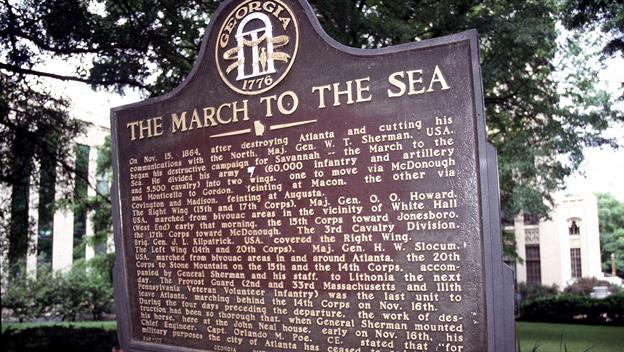
On this day in 1864, Union Army General William Tecumseh Sherman lays siege to Atlanta, Georgia, a critical Confederate hub, shelling civilians and cutting off supply lines. The Confederates retreated, destroying the city’s munitions as they went. On November 15 of that year, Sherman’s troops burned much of the city before continuing their march through the South. Sherman’s Atlanta campaign was one of the most decisive victories of the Civil War.
William Sherman, born May 8, 1820, in Lancaster, Ohio, attended West Point and served in the army before becoming a banker and then president of a military school in Louisiana. When the Civil War broke out in 1861 after 11 Southern slave states seceded from the Union, Sherman joined the Union Army and eventually commanded large numbers of troops, under General Ulysses S. Grant, at the battles of Shiloh (1862), Vicksburg (1863) and Chattanooga (1863). In the spring of 1864, Sherman became supreme commander of the armies in the West and was ordered by Grant to take the city of Atlanta, then a key military supply center and railroad hub for the Confederates.
Sherman’s Atlanta campaign began on May 4, 1864, and in the first few months his troops engaged in several fierce battles with Confederate soldiers on the outskirts of the city, including the Battle of Kennesaw Mountain, which the Union forces lost. However, on September 1, Sherman’s men successfully captured Atlanta and continued to defend it through mid-November against Confederate forces led by John Hood. Before he set off on his famous March to the Sea on November 15, Sherman ordered that Atlanta’s military resources, including munitions factories, clothing mills and railway yards, be burned. The fire got out of control and left Atlanta in ruins.
Sherman and 60,000 of his soldiers then headed toward Savannah, Georgia, destroying everything in their path that could help the Confederates. They captured Savannah and completed their March to the Sea on December 23, 1864. The Civil War ended on April 9, 1865, when the Confederate commander in chief, Robert E. Lee, surrendered to Grant at Appomattox Courthouse, Virginia.
After the war, Sherman succeeded Grant as commander in chief of the U.S. Army, serving from 1869 to 1883. Sherman, who is credited with the phrase “war is hell,” died February 14, 1891, in New York City. The city of Atlanta swiftly recovered from the war and became the capital of Georgia in 1868, first on a temporary basis and then permanently by popular vote in 1877.
 http://www.history.com/this-day-in-history

Wednesday, 31 August 2016

Today in history


1980

Polish government signs accord with Gdansk shipyard workers

On this day in 1980, representatives of the communist government of Poland agree to the demands of striking shipyard workers in the city of Gdansk. Former electrician Lech Walesa led the striking workers, who went on to form Solidarity, the first independent labor union to develop in a Soviet bloc nation.
In July 1980, facing economic crisis, Poland’s government raised the price of food and other goods, while curbing the growth of wages. The price hikes made it difficult for many Poles to afford basic necessities, and a wave of strikes swept the country. Amid mounting tensions, a popular forklift operator named Anna Walentynowicz was fired from the Lenin Shipyard in the northern Polish city of Gdansk. In mid-August, some 17,000 of the shipyard’s workers began a sit-down strike to campaign for her reinstatement, as well as for a modest increase in wages. They were led by the former shipyard electrician Lech Walesa, who had himself been fired for union activism four years earlier.
Despite governmental censorship and attempts to keep news of the strike from getting out, similar protests broke out in industrial cities throughout Poland. On August 17, an Interfactory Strike Committee presented the Polish government with 21 ambitious demands, including the right to organize independent trade unions, the right to strike, the release of political prisoners and increased freedom of expression. Fearing the general strike would lead to a national revolt, the government sent a commission to Gdansk to negotiate with the rebellious workers. On August 31, Walesa and Deputy Premier Mieczyslaw Jagielski signed an agreement giving in to many of the workers’ demands. Walesa signed the document with a giant ballpoint pen decorated with a picture of the newly elected Pope John Paul II (Karol Wojtyla, the former archbishop of Krakow).
In the wake of the Gdansk strike, leaders of the Interfactory Strike Committee voted to create a single national trade union known as Solidarnosc (Solidarity), which soon evolved into a mass social movement, with a membership of more than 10 million people. Solidarity attracted sympathy from Western leaders and hostility from Moscow, where the Kremlin considered a military invasion of Poland. In late 1981, under Soviet pressure, the government of General Wojciech Jaruzelski annulled the recognition of Solidarity and declared martial law in Poland. Some 6,000 Solidarity activists were arrested, including Walesa, who was detained for almost a year. The Solidarity movement moved underground, where it continued to enjoy support from international leaders such as U.S. President Ronald Reagan, who imposed sanctions on Poland. Walesa was awarded the 1983 Nobel Peace Prize, and after the fall of communism in 1989 he became the first president of Poland ever to be elected by popular vote

Thursday, 15 October 2015

joke of the day

10 Facts About You:
1. You're reading this now.
2. You're realizing that this is a stupid fact.
4. You didn't notice I skipped number 3.
5. You're checking now.
6. You're smiling.
7. You're still reading this even though it is stupid.
9. You didn't realize I skipped number 8.
10.You're checking again and smiling because you fell for it again.
11. You're enjoying this.
12. You didn't realize I said 10 facts not 12.

health tip for today

Relax, it’s only sex. Stress and sex make bad bedfellows, it seems. A US survey showed that stress, kids and work are main factors to dampen libido. With the advent of technology that allows us to work from home, the lines between our jobs and our personal lives have become blurred.

People work longer hours, commutes are longer and work pervades all aspects of our lives, including our sexual relationships. Put nooky and intimacy on the agenda, just like everything else.

today in history


1917
Mata Hari executed

Mata Hari, the archetype of the seductive female spy, is executed for espionage by a French firing squad at Vincennes outside of Paris.

She first came to Paris in 1905 and found fame as a performer of exotic Asian-inspired dances. She soon began touring all over Europe, telling the story of how she was born in a sacred Indian temple and taught ancient dances by a priestess who gave her the name Mata Hari, meaning “eye of the day” in Malay. In reality, Mata Hari was born in a small town in northern Holland in 1876, and her real name was Margaretha Geertruida Zelle. She acquired her superficial knowledge of Indian and Javanese dances when she lived for several years in Malaysia with her former husband, who was a Scot in the Dutch colonial army. Regardless of her authenticity, she packed dance halls and opera houses from Russia to France, mostly because her show consisted of her slowly stripping nude.

She became a famous courtesan, and with the outbreak of World War I her catalog of lovers began to include high-ranking military officers of various nationalities. In February 1917, French authorities arrested her for espionage and imprisoned her at St. Lazare Prison in Paris. In a military trial conducted in July, she was accused of revealing details of the Allies’ new weapon, the tank, resulting in the deaths of thousands of soldiers. She was convicted and sentenced to death, and on October 15 she refused a blindfold and was shot to death by a firing squad at Vincennes.

There is some evidence that Mata Hari acted as a German spy, and for a time as a double agent for the French, but the Germans had written her off as an ineffective agent whose pillow talk had produced little intelligence of value. Her military trial was riddled with bias and circumstantial evidence, and it is probable that French authorities trumped her up as “the greatest woman spy of the century” as a distraction for the huge losses the French army was suffering on the western front. Her only real crimes may have been an elaborate stage fallacy and a weakness for men in uniform.

Wednesday, 14 October 2015

health for today

Sugar-coated. More than three million South Africans suffer from type 2 diabetes, and the incidence is increasing – with new patients getting younger. New studies show this type of diabetes is often part of a metabolic syndrome (X Syndrome), which includes high blood pressure and other risk factors for heart disease.

More than 80% of type 2 diabetics die of heart disease, so make sure you control your glucose levels, and watch your blood pressure and cholesterol counts.

today in history


1947
Yeager breaks sound barrier
U.S. Air Force Captain Chuck Yeager becomes the first person to fly faster than the speed of sound.

Yeager, born in Myra, West Virginia, in 1923, was a combat fighter during World War II and flew 64 missions over Europe. He shot down 13 German planes and was himself shot down over France, but he escaped capture with the assistance of the French Underground. After the war, he was among several volunteers chosen to test-fly the experimental X-1 rocket plane, built by the Bell Aircraft Company to explore the possibility of supersonic flight.

For years, many aviators believed that man was not meant to fly faster than the speed of sound, theorizing that transonic drag rise would tear any aircraft apart. All that changed on October 14, 1947, when Yeager flew the X-1 over Rogers Dry Lake in Southern California. The X-1 was lifted to an altitude of 25,000 feet by a B-29 aircraft and then released through the bomb bay, rocketing to 40,000 feet and exceeding 662 miles per hour (the sound barrier at that altitude). The rocket plane, nicknamed “Glamorous Glennis,” was designed with thin, unswept wings and a streamlined fuselage modeled after a .50-caliber bullet.

Because of the secrecy of the project, Bell and Yeager’s achievement was not announced until June 1948. Yeager continued to serve as a test pilot, and in 1953 he flew 1,650 miles per hour in an X-1A rocket plane. He retired from the U.S. Air Force in 1975 with the rank of brigadier general.

Tuesday, 13 October 2015

joke of the day

A lawyer runs a stop sign and gets pulled over by a sheriff. He thinks he's smarter being a big shot lawyer from New York and has a better education than an sheriff from West Virginia. The sheriff asks for license and registration. The lawyer asks, "What for?" The sheriff responds, "You didn't come to a complete stop at the stop sign." The lawyer says, "I slowed down and no one was coming." "You still didn't come to a complete stop. License and registration please," say the sheriff impatiently. The lawyer says, "If you can show me the legal difference between slow down and stop, I'll give you my license and registration and you can give me the ticket. If not, you let me go and don't give me the ticket." The sheriff says, "That sounds fair, please exit your vehicle." The lawyer steps out and the sheriff takes out his nightstick and starts beating the lawyer with it. The sheriff says, "Do you want me to stop or just slow down?"

health tip for today

 Here’s the rub. Improve your circulation and help your lymph glands to drain by the way you towel off. Helping your lymph glands function can help prevent them becoming infected. 

When drying off your limbs and torso, brush towards the groin on your legs and towards the armpits on your upper body. You can do the same during gentle massage with your partner.

today in history


1792
White House cornerstone laid
The cornerstone is laid for a presidential residence in the newly designated capital city of Washington. In 1800, President John Adams became the first president to reside in the executive mansion, which soon became known as the “White House” because its white-gray Virginia freestone contrasted strikingly with the red brick of nearby buildings.

The city of Washington was created to replace Philadelphia as the nation’s capital because of its geographical position in the center of the existing new republic. The states of Maryland and Virginia ceded land around the Potomac River to form the District of Columbia, and work began on Washington in 1791. French architect Charles L’Enfant designed the area’s radical layout, full of dozens of circles, crisscross avenues, and plentiful parks. In 1792, work began on the neoclassical White House building at 1600 Pennsylvania Avenue under the guidance of Irish American architect James Hoban, whose design was influenced by Leinster House in Dublin and by a building sketch in James Gibbs’ Book of Architecture. President George Washington chose the site.

On November 1, President John Adams was welcomed into the executive mansion. His wife, Abigail, wrote about their new home: “I pray heaven to bestow the best of blessings on this house, and on all that shall hereafter inhabit it. May none but wise men ever rule under this roof!”

In 1814, during the War of 1812, the White House was set on fire along with the U.S. Capitol by British soldiers in retaliation for the burning of government buildings in Canada by U.S. troops. The burned-out building was subsequently rebuilt and enlarged under the direction of James Hoban, who added east and west terraces to the main building, along with a semicircular south portico and a colonnaded north portico. The smoke-stained stone walls were painted white. Work was completed on the White House in the 1820s.

Major restoration occurred during the administration of President Harry Truman, and Truman lived across the street for several years in Blair House. Since 1995, Pennsylvania Avenue between the White House and Lafayette Square has been closed to vehicular traffic for security reasons. Today, more than a million tourists visit the White House annually. It is the oldest federal building in the nation’s capital.

Monday, 12 October 2015

joke of the day

Three doctors are discussing which types of patients they prefer. Doctor Watson says, ''I prefer librarians. All their organs are alphabetized.'' Doctor Fitzpatrick says, ''I prefer mathematicians. All their organs are numbered.'' Doctor Ahn says, ''I prefer lawyers. They’re gutless, heartless, brainless, spineless, and their heads and rear-ends are interchangeable.''

health tip for today

Here’s the rub. Improve your circulation and help your lymph glands to drain by the way you towel off. Helping your lymph glands function can help prevent them becoming infected.

When drying off your limbs and torso, brush towards the groin on your legs and towards the armpits on your upper body. You can do the same during gentle massage with your partner.

today in history


1492
Columbus reaches the New World
After sailing across the Atlantic Ocean, Italian explorer Christopher Columbus sights a Bahamian island, believing he has reached East Asia. His expedition went ashore the same day and claimed the land for Isabella and Ferdinand of Spain, who sponsored his attempt to find a western ocean route to China, India, and the fabled gold and spice islands of Asia.

Columbus was born in Genoa, Italy, in 1451. Little is known of his early life, but he worked as a seaman and then a maritime entrepreneur. He became obsessed with the possibility of pioneering a western sea route to Cathay (China), India, and the gold and spice islands of Asia. At the time, Europeans knew no direct sea route to southern Asia, and the route via Egypt and the Red Sea was closed to Europeans by the Ottoman Empire, as were many land routes. Contrary to popular legend, educated Europeans of Columbus’ day did believe that the world was round, as argued by St. Isidore in the seventh century. However, Columbus, and most others, underestimated the world’s size, calculating that East Asia must lie approximately where North America sits on the globe (they did not yet know that the Pacific Ocean existed).

With only the Atlantic Ocean, he thought, lying between Europe and the riches of the East Indies, Columbus met with King John II of Portugal and tried to persuade him to back his “Enterprise of the Indies,” as he called his plan. He was rebuffed and went to Spain, where he was also rejected at least twice by King Ferdinand and Queen Isabella. However, after the Spanish conquest of the Moorish kingdom of Granada in January 1492, the Spanish monarchs, flush with victory, agreed to support his voyage.

On August 3, 1492, Columbus set sail from Palos, Spain, with three small ships, the Santa Maria, the Pinta, and the Nina. On October 12, the expedition reached land, probably Watling Island in the Bahamas. Later that month, Columbus sighted Cuba, which he thought was mainland China, and in December the expedition landed on Hispaniola, which Columbus thought might be Japan. He established a small colony there with 39 of his men. The explorer returned to Spain with gold, spices, and “Indian” captives in March 1493 and was received with the highest honors by the Spanish court. He was the first European to explore the Americas since the Vikings set up colonies in Greenland and Newfoundland in the 10th century.

During his lifetime, Columbus led a total of four expeditions to the New World, discovering various Caribbean islands, the Gulf of Mexico, and the South and Central American mainlands, but he never accomplished his original goal—a western ocean route to the great cities of Asia. Columbus died in Spain in 1506 without realizing the great scope of what he did achieve: He had discovered for Europe the New World, whose riches over the next century would help make Spain the wealthiest and most powerful nation on earth.